 Grow Your Own Food: Is Home Mushroom Growing Really Worth the Cost and Effort?
 Grow Your Own Food: Is Home Mushroom Growing Really Worth the Cost and Effort?
If you’re anything like me, you love gourmet cooking. You crave that fresh, high-quality ingredient, and you value the idea of self-sufficiency. But let’s be honest: not everyone has the backyard space—or the sun exposure—for a sprawling vegetable garden.
Mushrooms are different. They are the ultimate “hidden gem” crop, happy to grow right on your kitchen counter or tucked away in a spare closet. The big question, though, is often the most practical one: Is starting a mushroom growing hobby a genuine worthwhile use of your money and time, or are you just better off grabbing a container at the grocery store?
Look, we could just tell you “Yes!” (because we love this hobby!), but the truth is, the answer is personal. It depends entirely on what you want to get out of it.
The Cost Equation: DIY vs. Store-Bought Gourmet
When we talk about whether it saves you money, we have to look specifically at gourmet varieties like Lion’s Mane, Shiitake, or Oyster mushrooms—the kind that are truly expensive at the market.
1. The Starter Kit Shortcut (Minimal Effort)
For the absolute beginner, this is the easiest path. You buy a professionally prepared, ready-to-go grow kit.
- The Price Tag: Expect to pay $20 – $30$ per kit.
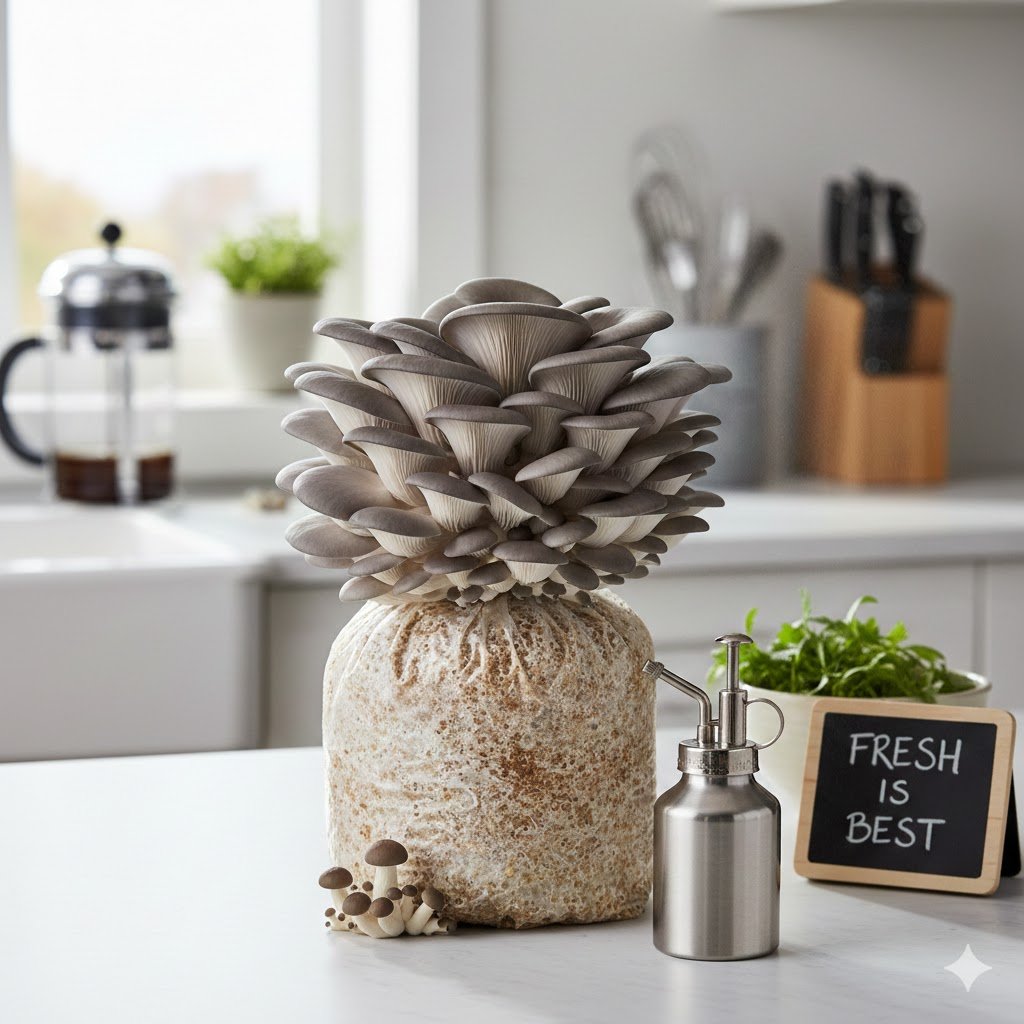
- The Commitment: Almost zero effort. You literally just cut a small opening in the bag and spritz it with water a couple of times a day.
- What You Get: A single kit usually gives you 1–2 pounds of fresh mushrooms over a couple of “flushes” (or harvests). Consider that the same mushrooms can easily cost $15 to $30 per pound at a boutique grocer.
- My Personal Take: With a $30 kit, you’re easily harvesting $30 to $60 worth of fresh food. In this scenario, the value absolutely crushes the initial cost and minimal effort. Plus, nothing beats the flavor of a mushroom picked 10 minutes before it hits the pan.
2. The Bulk DIY Approach (Maximum Savings)
This is for the person who has caught the bug and wants to grow multiple batches consistently. This means getting into the fun world of sterilization and substrate.
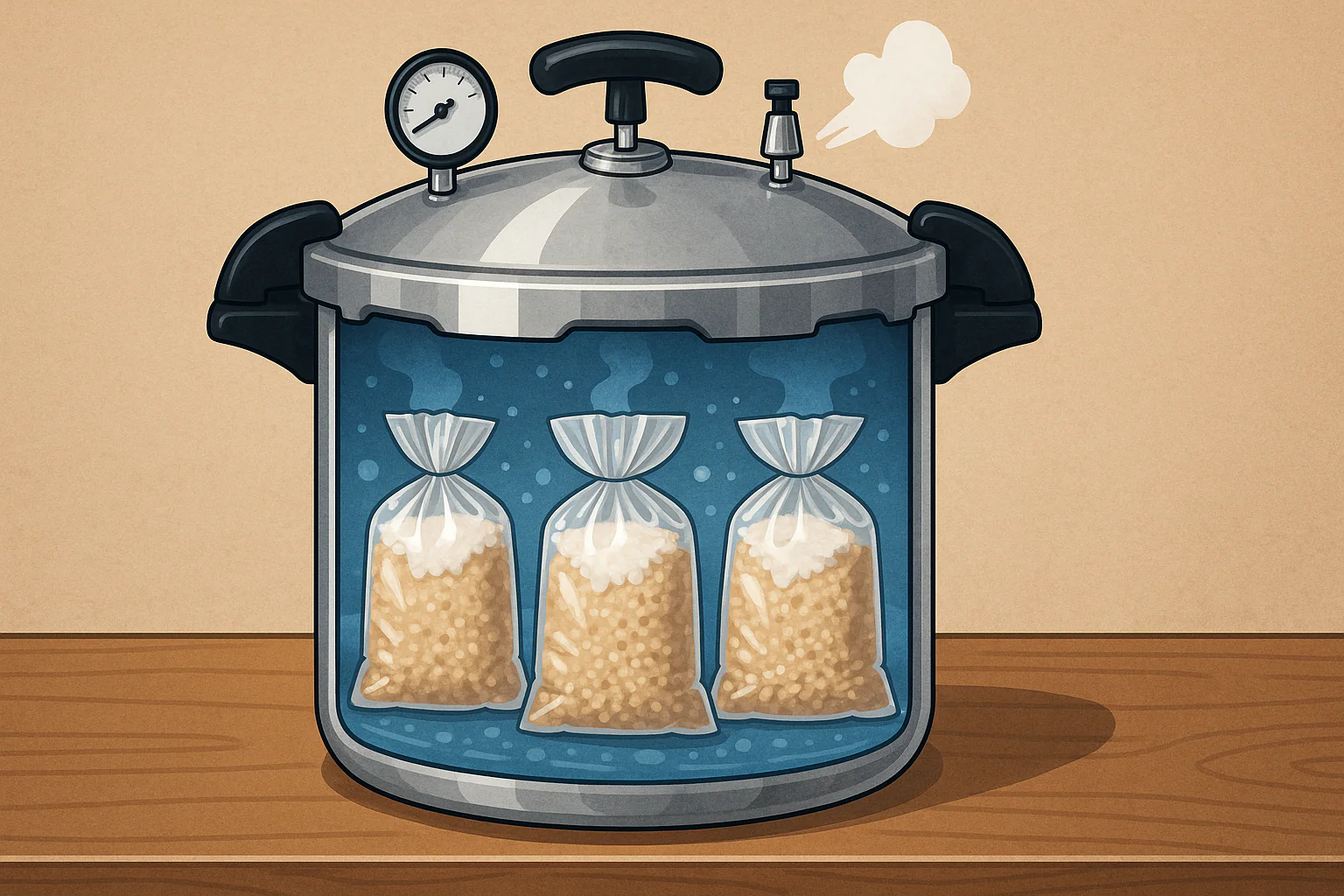
- The Upfront Gear: A higher initial investment ($100 – $400) for things like a pressure cooker, a fruiting container (like a monotub), grain spawn, and materials like hardwood pellets or coir.
- The Commitment: Moderate to high. You’re doing the prep work, the sterilization, the mixing, and the careful environmental control.
- What You Get: Your starter grain or liquid culture can inoculate many bulk substrate bags. Once you find your rhythm, many serious home growers estimate their cost at an unbelievable $2 to $4 per pound.
- My Personal Take: If you are eating gourmet mushrooms regularly, the DIY approach will cut your costs by a minimum of 50% to 80% over time. The effort is higher, but the reward is a freezer full of spawn and truly massive savings.
The Effort Equation: Time, Patience, and The Learning Curve
This is the make-or-break section. Growing mushrooms is less about watering and more about creating a delicate, balanced environment.
The Time Investment
| Phase | Starter Kit | DIY/Bulk Method |
| Initial Setup | 5 minutes | 1-2 hours (Sterilization is key!) |
| Daily Care | 2-5 minutes (A quick mist and fan) | 5-10 minutes (Checking conditions, misting, ventilation) |
| Time to Harvest | 10–14 days from setting up | 4–6 weeks (Incubation period is longer) |
The time commitment is definitely heavier at the start with the DIY method. But once your blocks are ready to fruit, the daily check-ins for both methods are pretty similar: making sure they have enough humidity and enough fresh air (FAE).
The Challenge of Contamination
Contamination—that’s the real hurdle. Fungi need super sterile conditions, and common molds and bacteria are everywhere, just waiting to ruin your perfectly prepared substrate.
- Grow Kit: Low risk. The block was sterilized in a professional environment.
- DIY/Bulk: High risk. You are the one responsible for sterility at every step. This requires patience, a clean workspace, and meticulous detail.
 Let’s call it the “Mycology Tuition Fee”: The first few times you try the DIY method, you might lose a batch or two to contamination. This is normal! Think of it as the price of learning how to manage a sterile process. It’s frustrating, but it drives home the value of investing in quality tools, like a proper pressure cooker and specialized grow bags.
Beyond the Numbers: Why I Keep Growing
If this hobby was only about balancing a spreadsheet, it would probably get boring fast. The true, lasting value of growing mushrooms lies in the things you can’t put a price on:
1. Unbelievable Flavor and Texture
Mushrooms start to go downhill the second they are picked. When you grow your own, they go from the block to the wok in literally five minutes. That firmness, that density of flavor—it’s a world away from anything shipped in a box.
2. Deep, Quiet Satisfaction
There’s a powerful, almost childlike joy in watching a tiny cluster of “pins” (baby mushrooms) explode into a massive, gorgeous cluster of Oyster mushrooms in less than two days. It’s instant gratification that connects you to the natural world right inside your home.
3. Sustainability in Action
You’re transforming materials that would otherwise be waste—like hardwood sawdust or coffee grounds—into high-value food. When you’re done, the spent block goes right into your compost or garden. It’s a beautifully closed loop.
The Final Verdict
| Your Main Goal Is… | My Honest Take Is… | Where I Recommend You Start |
| Taste & Novelty (Trying something new once a month) | Absolutely Worth It. You get freshness and fun with almost no learning curve. | A simple Starter Grow Kit |
| Consistent Savings (Eating gourmet mushrooms every week) | Worth the Effort. The long-term savings are huge, but accept that you’ll have a few failed batches at the start. | A Monotub setup, Grain Spawn, & Pre-sterilized Substrate Bags |
| Ultimate Self-Sufficiency (You want a never-ending supply) | Worth the Commitment. This requires serious attention to detail and good lab practices. | Pressure Cooker, Flow Hood components, and Environmental Control gear |
My advice? Start small, see how much you love the process, and then decide if you want to scale up. You don’t need a lab or a farm to experience the immense satisfaction of growing your own dinner.
Ready to start your first flush? We’ve got the highest-quality kits and supplies for every stage of your mushroom journey.